
A replacement grille can look right in a photograph and still have the wrong clips, bumper profile or sensor mounts. The safest way to choose one is to match your car’s exact specification, confirm the correct part reference and check what the replacement includes before paying.
For drivers in Qatar, that also means checking whether the vehicle was originally supplied for the GCC market or imported from elsewhere. Start with the details below, then compare appearance and price.
1. Identify Your Car Beyond Its Model Name
Two cars with the same model name and registration year may use different grilles. A facelift, trim package or production change can alter the front bumper and its attachment points.
Have these details ready:
- Make, model and body style.
- Model year and production date, where available.
- Trim level and engine specification.
- Vehicle identification number, or VIN.
- Original market specification and any front-end modifications.
The registration year alone is not enough. Ask the supplier to check the relevant parts catalogue using the VIN.
Photograph any number moulded into the existing grille and ask the supplier to cross-reference it. Some markings identify a component rather than the complete assembly, and an older part number may have been replaced by a newer one.
2. Confirm Which Grille Section You Need
“Front grille” can mean the main upper grille, a lower bumper insert, a side insert or a complete assembly. Ordering the wrong section creates an avoidable delay, even when the vehicle details are correct.
Check whether the damaged area is supplied separately. A broken decorative surround may not require replacing every grille component.
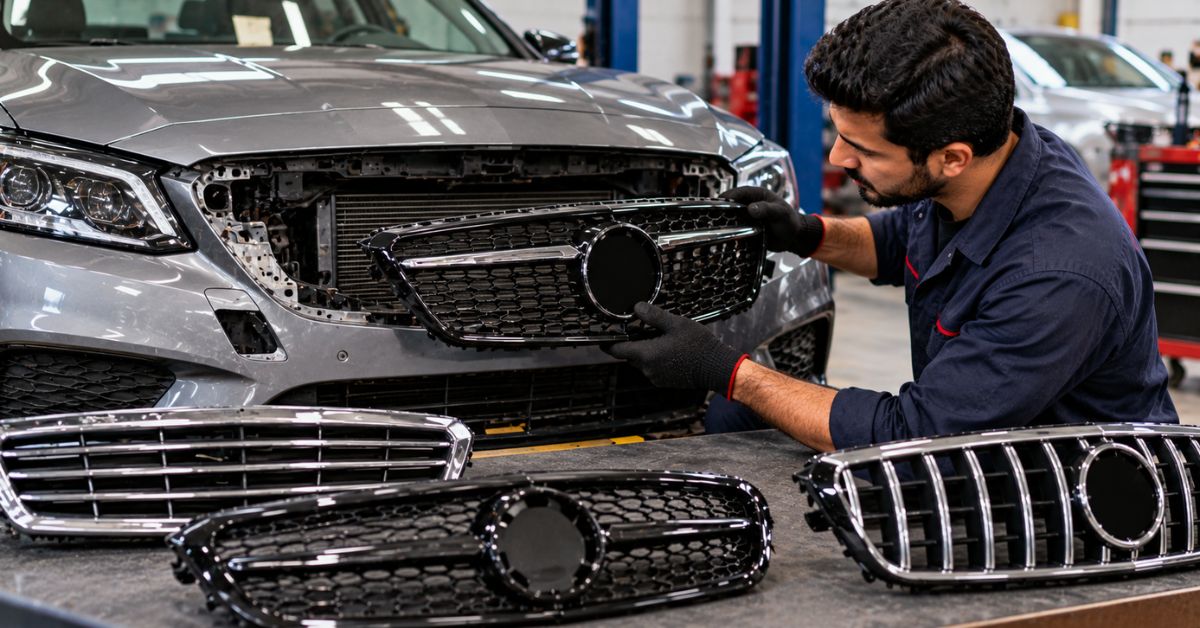
SWAT Auto Parts lists grilles among its auto body parts in Doha. When enquiring, send a clear front photograph with the damaged section identified. Ask whether the proposed replacement is an insert, a bare grille or an assembly with surrounding trim.
3. Compare the Mounting Points and Surrounding Panels
Width and height are useful checks, but they cannot prove fitment. The grille’s depth, curvature and rear attachments must also suit the bumper.
Compare:
- The positions and shapes of clips, tabs and screw holes.
- The edges beside the headlights and bonnet.
- The central emblem recess and mounting arrangement.
- Any separate brackets or supports behind the grille.
Rear photographs are particularly helpful because similar-looking grilles can have different fixing layouts.
If the grille broke in a collision, have the surrounding mounting areas inspected first. A distorted bumper or broken support can prevent the correct replacement from sitting properly. Do not assume a visible gap means the new grille is wrong, or force it into place to hide underlying damage.
4. Check Compatibility With Sensors and Cameras
Some vehicles have a front camera, radar unit or parking sensors in or behind the grille area. The replacement must accommodate the equipment actually fitted to your car.
An opening in approximately the right place is not enough. The correct bracket, mounting angle and, where applicable, radar-compatible cover or emblem also matter. An unsuitable accessory placed in front of a sensor can obstruct its operation.
Ask whether existing sensor mounts transfer across and whether additional holders are required. Avoid treating a grille intended for a vehicle without driver-assistance equipment as interchangeable with a sensor-equipped version.
Before booking installation, ask the workshop to check the vehicle-specific repair procedure for scanning, adjustment and calibration requirements. These vary by model and by what is removed or disturbed. A grille that clips into place has passed only the physical fit check.
5. Preserve the Intended Airflow
In Qatar’s summer conditions, maintaining the vehicle’s designed cooling airflow deserves attention. A different grille pattern should not be assumed to improve cooling simply because its openings look larger.
Check that the replacement works with the original air guides, seals and ducts. Avoid adding decorative mesh or covers that restrict openings without confirming suitability.
Some cars also have active grille shutters behind the visible grille. These moving vanes regulate airflow and are a separate consideration when selecting parts. Confirm whether the quotation includes only the decorative grille or any shutter components.
If shutters were damaged in the same impact, replacing the visible grille alone will not resolve that fault.
6. Assess Construction and Finish
Inspect the replacement for cracked mounting tabs, distorted edges, uneven moulding and loose decorative pieces. On a used grille, look closely for repaired attachment points and cracks hidden behind the face.
For painted or coated parts, check for peeling, bubbling and inconsistent colour. Ask whether the grille arrives finished or needs preparation and painting.
Terms such as “original,” “replacement” and “premium” need clarification. Ask exactly what is being supplied and what warranty applies. An aftermarket description does not establish compatibility, while an original part still needs the correct specification.
For Qatar, ask about suitability for prolonged sunlight and outdoor exposure without assuming every finish has the same durability.
7. Compare the Complete Installed Cost
A low grille price can become less attractive once missing parts and labour are added.
Request an itemised quotation covering the grille, required clips, brackets, trim, emblem, painting and installation. Include diagnostic checks or calibration if the repair procedure requires them.
Also confirm whether your existing parts can be reused. An assembly pictured with an emblem or camera does not necessarily include those items.
Before ordering, ask about delivery time and the return conditions for an incorrect fit. Clarify whether a careful trial fit is allowed and whether painting or modification affects eligibility. Keep the packaging and written fitment confirmation until the part has been checked.
8. Arrange a Trial Fit Before Finishing
Where the installation procedure allows, have the workshop check alignment before painting or making permanent changes. The grille should sit in its intended position with the specified fixings engaged and without improvised cutting or forced bending.
After installation, check for loose trim, uneven gaps, contact with nearby panels and rattles. Where fitted, cameras and sensors need the prescribed functional checks.
You can enquire about garage workshop services in Doha and confirm whether the work required for your particular vehicle is available.
Frequently Asked Questions
Can I buy a grille using only my car’s model year?
No. Trim, production changes, market specification and fitted equipment can affect compatibility. Confirm the part through a VIN-based catalogue check.
Will a facelift grille fit an older version?
Do not assume so. It may require different surrounding panels, brackets or other components. Confirm the complete conversion requirements first.
Can I reuse my existing emblem?
Sometimes. Its mounting design must match, and any radar-related specification must be preserved. Check before transferring it.
Does every grille replacement require calibration?
No. Requirements depend on the vehicle and the repair performed. The workshop should follow the specific repair instructions.

