
A car hood that bounces back, stays raised at one corner or refuses to latch needs checking before your next journey. Common causes include an obstruction, a sticking latch, a release cable that has not returned, or misalignment between the hood and its locking mechanism.
Stop repeatedly slamming it. That can damage the panel without fixing the fault. Work through the visible checks first, then have any damaged or incorrectly adjusted parts inspected professionally.
Start with a Safe Inspection
Park on level ground, apply the parking brake and switch off the engine. Let hot components cool before reaching into the engine compartment. Secure the open bonnet with its designated support rod or properly functioning support struts.
Keep fingers clear of the latch and hinges. If the hood will not stay open safely, stop the inspection.
Do not drive unless the hood is fully latched. A secondary safety catch is a backup, not a substitute for the main lock. If you cannot secure the hood, arrange mobile assistance or vehicle recovery instead of driving to a workshop.
Common Causes of a Hood That Will Not Close
1. Something Is Blocking the Closing Path
Start here, especially if the problem appeared immediately after servicing or checking fluids. A forgotten tool, cloth, displaced plastic cover or incorrectly stowed support rod can prevent the hood from reaching the latch.
Check the perimeter, the area above the radiator and the underside of the hood. Look for loose insulation or a rubber seal that has folded out of position. Confirm that fluid caps are correctly fitted without opening hot reservoirs.
Remove loose objects and return the support rod to its retaining clip before closing. Never press the hood down against resistance to find out what is underneath.
2. Dirt or Corrosion Is Restricting the Latch
Dust and grit can accumulate around moving latch parts. Mixed with old grease, contamination can stop a lever returning freely. Qatar’s dusty conditions make a visual check of this exposed area worthwhile.
Look for packed debris, dried residue and corrosion around the latch. Gently remove accessible loose dirt with a soft brush or cloth while keeping your fingers outside the mechanism.
Use only the cleaner, lubricant and application method specified for your vehicle. Avoid flooding the assembly with general-purpose spray or packing grease over dirt. A latch that remains stiff, damaged or unreliable needs professional attention; lubrication cannot restore a broken component.
3. The Latch Has Closed While the Hood Is Open
The latch jaw can sometimes move into its closed position before the hood comes down. The striker, the metal loop or pin that enters the latch, then meets a blocked opening. The hood may hit a firm stop and bounce back.
With the hood safely supported, check whether the latch opening appears obstructed by its own jaw. Operating the normal cabin release may reset it, depending on the design.
Do not insert your fingers, force the jaw with a screwdriver or repeatedly drop the hood onto it. If normal release operation does not restore it, have a technician reset and inspect the mechanism.
4. The Release Cable Is Not Returning
A sticking cable, displaced cable housing or binding release lever can keep the latch partly released. The hood reaches its normal position but fails to stay locked.
Check whether the cabin release handle has returned to its resting position. A handle that remains pulled out, feels unusually stiff or has suddenly become loose is a useful diagnostic clue.
Do not keep tugging it. The workshop should check the handle, cable routing, attachment points and latch return action. A broken cable more often prevents opening; a binding cable can interfere with relatching.
5. The Striker and Latch Are Misaligned
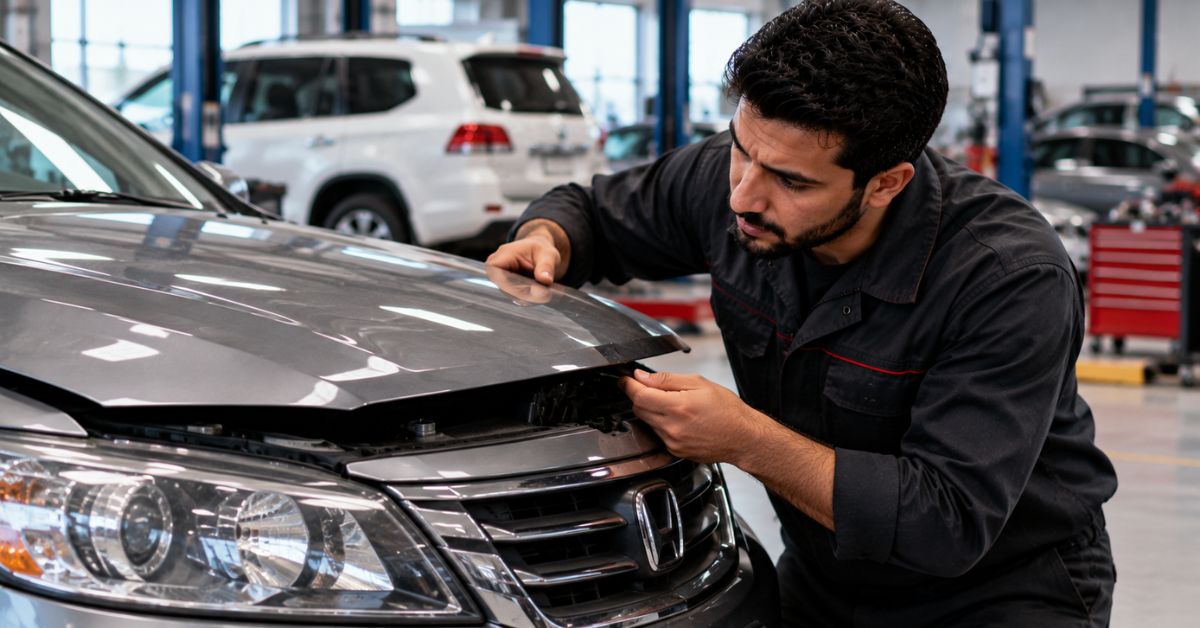
If the hood sits unevenly or the striker catches one side of the latch opening, alignment may be the problem. This deserves particular attention after a front-end impact, hood replacement or body repair.
Compare the gaps beside both front wings and above the headlights. Fresh scrape marks near the striker can indicate contact away from its intended position, although marks alone do not confirm the fault.
Leave latch and hinge adjustments to a technician. Moving the lock until the hood appears flush can conceal inadequate engagement or underlying damage to its mounting support.
6. Rubber Stops or Hinges Are Affecting the Fit
Rubber bump stops support the closed hood and control its resting height. Incorrect adjustment can interfere with closure, while missing or compressed stops may allow movement or rattling. A bent or binding hinge can also prevent the panel lowering evenly.
Look for damaged stops, an unusually raised corner or a hood that twists as it lowers. Do not remove the stops or turn them randomly to make the hood shut. Their settings must work with the specified panel alignment and latch engagement.
7. A Worn or Broken Component Cannot Hold Securely
A weak or broken return spring, damaged latch jaw, loose mounting or bent striker can cause inconsistent locking. Sometimes the hood closes once and refuses the next time.
That inconsistency matters. Ask the technician to check both the main latch and the secondary catch, where fitted, and confirm whether the fault requires replacement rather than cleaning or adjustment.
SWAT’s auto body parts range in Doha includes hoods. If replacement is necessary, confirm the exact component and vehicle compatibility before ordering; a closing problem does not automatically require a new hood.
Check the Closing Method Before Assuming a Part Has Failed
Follow your vehicle’s owner manual. Some hoods close with a controlled drop from a specified height; others require pressure at designated points. There is no single drop height or pushing technique suitable for every vehicle.
After closing, check that the panel sits correctly and verify engagement using the manual’s procedure. Do not rely on a click alone. If the front edge lifts into the safety-catch position, the main latch has not secured it.
A persistent hood-open warning also needs attention. First establish that the hood is mechanically secure, then investigate the switch, connector or wiring if necessary. Never bypass the warning to hide the symptom.
For an unresolved problem, ask about an inspection through SWAT’s garage workshop services in Doha. Explain whether it started after maintenance, bodywork or an impact.
Conclusion
A hood that will not close needs a clear diagnosis before more force or replacement parts. Start with obstructions and visible latch problems, then have cable return, alignment and damaged hardware checked. Going forward, include latch conditions in routine servicing and investigate any change in closing effort early. You can contact SWAT Auto Parts to discuss the inspection or parts needed for your vehicle in Qatar.
Frequently Asked Questions
Can I drive if the hood is held by the safety catch?
No. The main latch must engage securely. Arrange assistance or recovery if it will not lock.
Why does my hood bounce back when I close it?
Check for an obstruction, an already-closed latch jaw, a release mechanism that has not reset or incorrect alignment.
Can lubricant fix a hood that will not latch?
It may help a dirty or stiff mechanism after proper cleaning. It will not repair broken springs, worn parts or misalignment.
Does a hood-open warning always mean the hood is loose?
No. A switch or wiring fault is possible, but secure mechanical engagement must be confirmed first.

