
Buying car accessories for older models takes more than matching a model name and year. A previous owner may have changed the mirrors, seats or dashboard, while a mid-generation update may have altered the original fittings.
For drivers in Qatar, the safest approach is to identify the exact vehicle, compare the accessory with what is currently fitted, and agree on compatibility before paying. These checks help prevent wasted purchases and expensive installation adjustments.
Start With the Exact Vehicle Details
Before shopping, prepare a short vehicle record containing:
- Make, model and body style.
- Model year and production month, where available.
- Vehicle identification number (VIN), or chassis number.
- Trim level and relevant factory equipment.
- Original sales market, including whether it is a GCC-specification vehicle or an import.
- Any known changes to the area receiving the accessory.
Do not rely only on the first registration year. Ask the supplier to check the vehicle identification details against the accessory’s application information.
For an older imported car in Qatar, mention its original market rather than simply saying it is registered locally. Ask whether the proposed accessory covers that version.
A VIN helps identify the original vehicle specification. It cannot show every modification made during the car’s life, so photographs and a physical inspection still matter.
Check Generation and Facelift Boundaries
A listing covering several years deserves a closer look, especially if your car was built near a design update. “Facelift” means a revision within the same model generation, and it can affect the areas where accessories attach.
For window visors, compare the door frames and window outlines. For mirror covers, check the complete mirror housing, including any indicator opening. For decorative grille pieces, compare the grille already on the car.
Swat Auto Parts’ auto body parts range in Doha includes mirrors, grilles, bumpers and other exterior components. When an accessory attaches to one of these parts, establish which version is fitted before choosing the accessory.
A matching front-view photograph is useful, but it does not confirm the hidden clips or mounting surfaces.
Use Part Numbers Carefully
When replacing an existing accessory, photograph any label, stamped reference or moulded number. Include the complete number and any letters following it.
Ask the supplier to establish whether that marking is an orderable part number, a production code or a reference for only one component. Treat it as evidence to investigate rather than automatic proof of compatibility.
If the original item is discontinued, request the replacement reference and confirmation of its application. Ask whether additional brackets, clips or adapters are required.
Avoid accepting “the newer one should fit” without an explanation. A suitable replacement should have a clear matching application and an understood installation method.
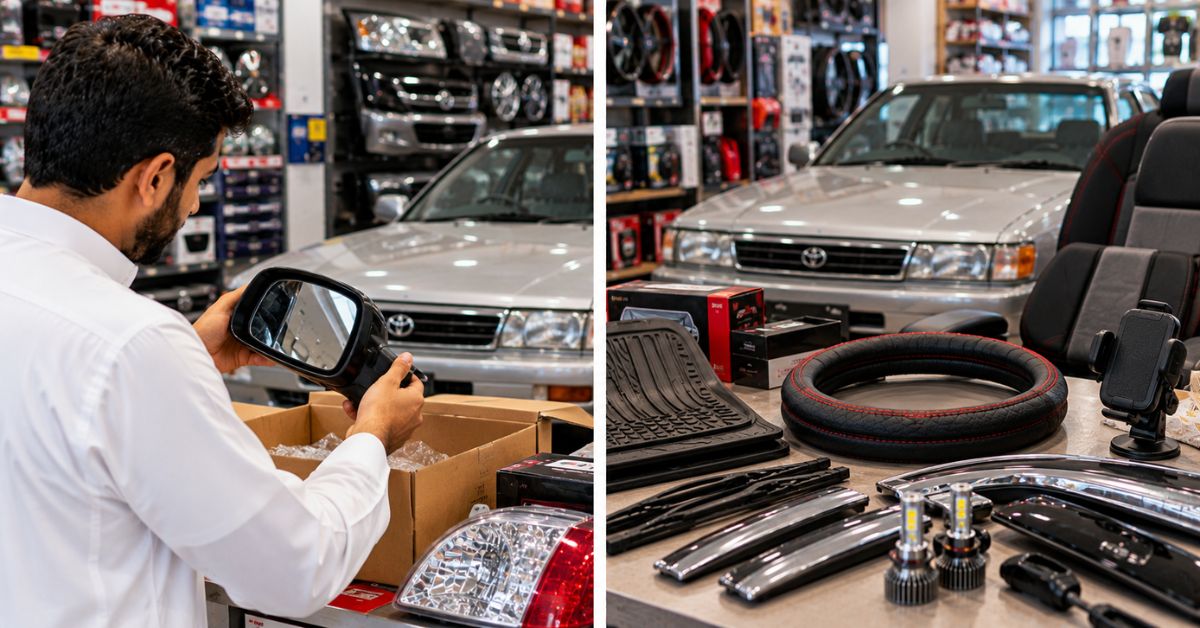
Compare the Measurements That Actually Control Fit
Overall length and width are only a starting point. Check the attachment points, clearance and shape that determine whether the accessory can be installed properly.
| Accessory | Checks before purchase |
| Floor mats | Footwell outline, retention points and clearance around pedals |
| Seat covers | Seat shape, headrests, adjustment controls and documented compatibility with any seat-mounted airbags |
| Window visors | Door count, window profile and in-channel or adhesive mounting method |
| Mirror covers | Housing shape, retaining tabs and indicator cut-outs |
| Phone holders | Mounting surface, adjustment range and clearance around controls |
| Boot liners | Boot-floor shape, load-floor position and rear-seat arrangement |
Measure between mounting-hole centres where relevant. Photograph the measuring tape beside the original component so the supplier can see exactly what was measured.
For a left- or right-side item, identify the side from the seated driver’s perspective, facing forward. This avoids ambiguity when photographs are taken from outside the car.
Separate Electrical Compatibility From Physical Fit
For an accessory requiring power, ask the installer to confirm these points before ordering:
- Required supply voltage and current draw.
- Connector shape, pin arrangement and wiring functions.
- Appropriate wiring adapter and fuse protection.
- Functions that will remain available after installation.
For a replacement stereo, make the questions specific: will the existing speakers, steering-wheel buttons and reversing camera still work, if fitted? Ask for the complete installation requirements and price, including any adapters.
Do not authorise trial-and-error wire connections because a plug appears to fit. Photograph existing connectors without dismantling unfamiliar wiring yourself.
Swat Auto Parts lists diagnostic services and electrical system repairs through its auto garage workshop in Doha. Ask whether the workshop can inspect your particular setup before you purchase the accessory.
Inspect the Car’s Existing Mounting Surfaces
An older car needs a condition check as well as a compatibility check. Inspect the area receiving the accessory for missing clips, previous adhesive, damaged trim and signs of earlier repairs.
A correctly specified accessory cannot compensate for a broken mounting point. Ask the installer whether the supporting component needs repair first, and include that work in the budget.
For adhesive-mounted items used in Qatar, request the product’s temperature limits and installation instructions. Check that the adhesive is intended for the actual surface, particularly if it has been repainted or repaired.
Also inspect older replacement stock for distortion, cracked tabs or damaged seals. Confirm what fixings are included so you do not discover missing hardware halfway through installation.
Agree on Trial Fitting and Returns Before Paying
Ask for written compatibility confirmation identifying your vehicle and the accessory supplied. Keep the quotation, application details and photographs with the receipt.
Clarify whether the seller permits a non-destructive trial fit and what happens if the item does not match. Ask about opened packaging, electrical testing, special orders and return deadlines. Do not assume every category has the same conditions.
Where permitted, compare the item with the vehicle before removing adhesive backing, drilling, painting or altering wiring. Follow the installation instructions, and stop if alignment requires unexpected force or modification.
You can contact Swat Auto Parts with your vehicle details, reference numbers and photographs to ask about availability and suitability. Request the complete cost in QAR, including required fittings and labour.
Frequently Asked Questions
Is the model year enough to choose an accessory?
No. Check the generation, body style, production details and relevant equipment. Previously modified cars also need comparison with the components currently installed.
Can universal accessories fit older cars?
Sometimes. Confirm the stated dimensions, mounting method and adjustment range. Treat “universal” as a claim to verify against your vehicle.
What if the original accessory is discontinued?
Ask for a documented replacement application. Confirm whether it needs extra fittings and whether the seller allows a trial fit or return.
Should I take the old accessory to the shop?
Yes, if it can be removed safely. Otherwise, provide clear photographs of its label, mounting points and overall shape.

