
Before buying car accessories in Qatar, check three things: whether the item fits your exact vehicle, whether it works with the existing equipment, and whether it can be installed safely. A matching model name or a convincing product photo is only a starting point.
A few checks before payment can save you from buying a loose floor mat, an incompatible electrical accessory or an exterior fitting that blocks a sensor. Here is how to check properly.
Start With Your Exact Vehicle Details
Give the supplier more than the model name and the year you bought the car. First registration, model year and production date are not always the same.
Prepare the following:
- Make, model and model year.
- Body style and trim: different versions may have different bumpers, consoles or seats.
- VIN or chassis number: ask the supplier to check it against the relevant parts information.
- Production date: useful when a design changed during a model year.
- Market specification: mention whether the car is GCC specification or an import from another market.
Do not assume that an accessory advertised for a model sold overseas will suit your Qatar vehicle. Check the actual specification. Also mention previous modifications: a VIN lookup will not reveal an aftermarket bumper, replacement seat or changed audio system.
Check the Part Number and Fitment Notes
Look for a clear compatibility list covering your vehicle’s generation, year range, body style and relevant equipment. Read exclusions carefully. “Without parking sensors” or “before facelift” can matter more than the main product title.
When replacing an existing item, photograph its label and part number. Ask the supplier to cross-reference that number, including any suffix, rather than matching the shape alone. A different number may be a valid replacement, but it needs confirmation.
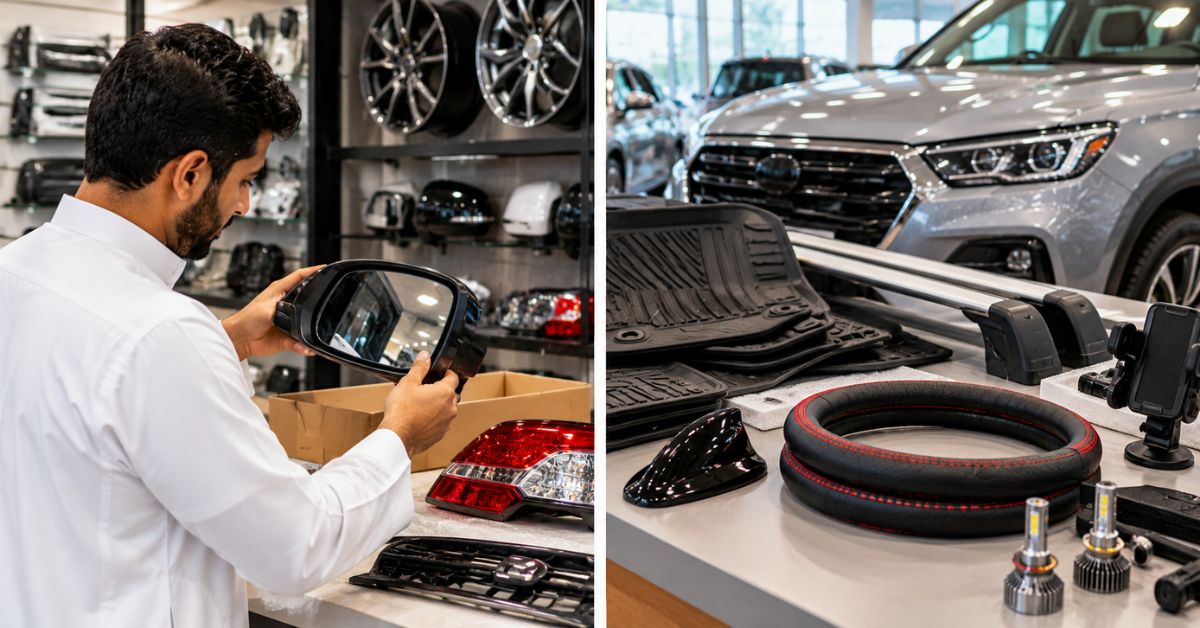
SWAT Auto Parts lists mirrors, grilles, bumpers and headlights among its auto body parts in Doha. For these items, confirm the precise version and included fittings before ordering.
Measure the Mounting Area and Moving Clearances
“Universal fit” usually means adjustable or suitable for several vehicles. It does not confirm that the item will work in your particular cabin or mounting position.
Compare the accessory’s dimensions with the available space, then check attachment points and nearby movement:
- Floor mats: match the footwell shape and retention points. Check full pedal travel, and never stack a new driver’s mat over another mat.
- Phone holders: check the clamp range with your phone case fitted, mounting stability and access to nearby controls.
- Boot liners: confirm the cargo-floor position and whether you need access to underfloor storage or folding seats.
- Exterior fittings: compare clips, mounting holes and clearance when doors, mirrors or the boot open.
Measure the usable space, not just the widest visible area. A raised edge or hidden bracket can prevent an otherwise suitable item from seating correctly.
Verify Electrical Compatibility Before Connecting Anything
A plug that fits is not enough. Check the accessory’s input voltage and power demand against the vehicle outlet or intended electrical circuit. Follow the limit in your own owner’s manual; do not assume every socket has the same capacity.
For accessories connected to vehicle wiring, ask an installer to confirm the connector, pin functions, fuse protection and any required interface or programming. A replacement mirror, for example, must support the functions you intend to retain, such as adjustment, folding or an integrated camera.
Also check whether the accessory stays powered after the ignition is switched off. Equipment intended to operate while parked needs an appropriate power arrangement and battery protection.
SWAT’s garage workshop services in Doha include electrical system repairs and diagnostics. Ask whether the team can assess your proposed installation before buying.
Keep Airbags, Cameras and Sensors Clear
Check the vehicle manual before adding seat covers, dashboard accessories or equipment around the windscreen pillars. These areas can contain airbags or form part of their deployment paths.
A seat cover’s “airbag compatible” label should not override the vehicle manufacturer’s instructions. Some manuals prohibit accessory seat covers. Keep seat belts, adjustment controls and child-seat attachment points accessible too.
Exterior accessories need similar care. Radar sensors may sit behind a grille or bumper, while cameras need an unobstructed view. A fitting that looks harmless can interfere with these systems.
If installation involves removing, moving or replacing a sensor or its mounting, ask a qualified workshop whether the vehicle’s repair procedure requires calibration. Do not treat an absence of dashboard warnings as proof of compatibility.
Check Suitability for Qatar’s Heat and Outdoor Use
For electronics left inside a parked car, check both operating and storage temperature limits. Storage tolerance does not mean the device can run continuously at that temperature.
For dashboard mounts, ask whether the attachment method suits the surface and expected heat exposure. Follow the specified cleaning and curing instructions for adhesive fittings.
Exterior accessories should have documented suitability for their exposure to sunlight, dust and water. A vague “weatherproof” description is less useful than clear installation and care instructions. Choose based on where the item will actually be used.
Agree on Installation and Return Conditions
Before payment, request an itemised quote covering the accessory, brackets, wiring adapters, installation and any necessary programming or calibration. A lower purchase price may exclude essential fitting components.
Where appropriate, arrange a dry fit before drilling, painting, cutting or removing adhesive backing. Confirm whether trial fitting, opening the packaging or connecting an electrical item affects return eligibility.
Keep the packaging, invoice and written fitment confirmation until the installation has been checked. If the proposed accessory changes lighting, bodywork or other regulated features, confirm current Qatar approval requirements with the Traffic Department before proceeding.
Conclusion
The right accessory should fit securely, preserve the car’s existing functions and suit its operating conditions. Exact vehicle details, documented compatibility and a sensible installation plan matter more than appearance alone.
As vehicle features become more integrated, checking connections and sensor clearance will remain essential. Before ordering, contact SWAT Auto Parts with your vehicle details, photographs and the item you need. Resolve fitment questions before paying for an accessory or making permanent changes.
Frequently Asked Questions
1. Is the model year enough to confirm compatibility?
No. Body style, trim, production date, market specification and fitted equipment can also affect compatibility.
2. Will a universal accessory fit any car?
No. Check its adjustment range, dimensions, mounting method and clearance around controls before buying.
3. Does GCC specification guarantee that an accessory fits?
No. It identifies a market specification, but you still need to verify the exact vehicle and accessory combination.
4. Can I install an electrical accessory myself?
Follow its instructions for simple plug-in items. Have a qualified installer assess anything requiring wiring changes or programming.
5. What should I send the supplier before ordering?
Send the VIN or chassis number, model details, relevant part number and clear photos of the item and mounting area.

