
Replacing a damaged car door makes more sense when its safety reinforcement is damaged, its shell cannot be restored within the manufacturer’s repair limits, or a proper repair costs nearly as much as a suitable replacement. Minor dents, scratches and isolated hardware faults usually deserve a repair assessment first.
For drivers in Qatar, the decision should start with an inspection beneath the visible damage, followed by a comparison of complete, fitted costs.
Find Out What Is Actually Damaged
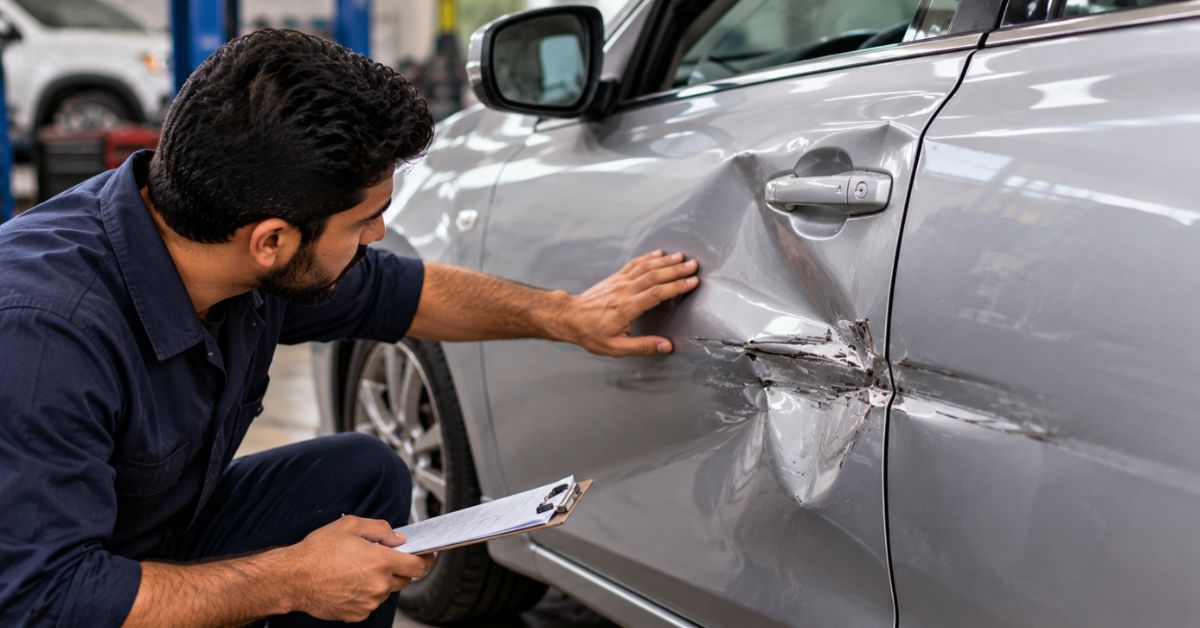
A door can look badly dented while its underlying structure remains sound. Equally, a relatively small impact near a hinge or latch can affect how securely it closes.
Ask the workshop to inspect:
- The outer skin and inner door shell.
- The side-impact reinforcement and its mounting points.
- Hinges, latch, striker and surrounding metal.
- Window guides, regulator, wiring and seals.
- The body pillars and sill around the door opening.
That last check matters. If the vehicle’s door opening has moved, fitting another door will not correct the underlying damage.
Do not keep driving if the door cannot latch securely. Arrange professional assessment and recovery where necessary instead of repeatedly slamming it or tying it shut.
When Repair Is the Sensible First Choice
Repair is often worthwhile when damage is limited to the exterior panel and the door’s structure, fit and operation remain correct.
A shallow dent with intact paint may suit paintless dent repair. Suitability depends on the metal’s condition, access behind the panel and the dent’s position. A sharp crease or stretched metal needs a different assessment.
Scratched paint or a modest dent requiring refinishing does not automatically justify replacing the whole door. Likewise, a failed window regulator, handle or lock may only require that component.
If the main problem is electrical, SWAT Auto Parts’ garage services in Doha include electrical diagnosis and repairs. Establish the fault before ordering a door assembly.
When Replacement Becomes the Stronger Option
The side-impact reinforcement is damaged
The reinforcement inside the door helps protect occupants during a side collision. A damaged intrusion beam must be replaced, not straightened back into shape.
Where the beam is welded into the door, damage generally requires replacing the door shell. Some designs have separately replaceable, bolted reinforcements. The vehicle-specific repair procedure determines the correct approach.
A smooth outer panel is therefore not proof that the door is safe.
The shell cannot be restored correctly
Severe distortion, torn metal or damage around critical attachments can make replacement necessary. The workshop should explain whether the affected material and location are repairable under the manufacturer’s instructions.
Be cautious about a proposal that concentrates on filling and painting the exterior while leaving the inner shell distorted. Body filler restores surface contours; it cannot restore damaged reinforcement.
However, a door that sits low does not automatically need replacement. The cause could be a replaceable hinge, damaged mounting area or movement in the vehicle body.
Corrosion or previous repairs leave poor material underneath
Surface rust alone does not condemn a door. Perforation, weakened seams or extensive corrosion inside the lower edge presents a different problem.
Previous repairs also deserve inspection. Cracked filler or bubbling paint may reveal damage that needs to be stripped back before a dependable estimate is possible. Replacement becomes more attractive when little sound material remains or another repair would have doubtful durability.
Could Replacing Just the Door Skin Be Enough?
There is sometimes a middle option: replacing the outer skin while retaining the sound inner structure.
This may suit extensive cosmetic damage where the reinforcement, shell and attachment areas pass inspection. It depends on skin availability and an approved replacement procedure for that vehicle.
Skin replacement still involves substantial work. The technician must remove the damaged panel, attach the replacement correctly and restore sealing and corrosion protection.
Ask for this option to be priced alongside repair and shell replacement. A cheaper panel does not necessarily produce the lowest finished bill.
Compare Complete Quotes, Not Just Part Prices
Request itemised quotations in Qatari riyals for each technically acceptable option. Both should cover the same standard of finish and functionality.
Check whether the totals include:
- Dismantling and inspection.
- Repair labour or the replacement part.
- Transferring usable glass, trim, locks and wiring.
- Paint preparation, refinishing and any necessary colour blending.
- Seals, clips, adhesives and corrosion protection.
- Alignment, electrical checks and required electronic procedures.
For example, a repair may initially appear cheaper but require many hours of metalwork. Conversely, a reasonably priced bare shell may become expensive once transfer labour and painting are included.
Ask what happens if hidden damage appears after dismantling, and request approval before additional work proceeds. Compare completion dates and workmanship cover too.
There is no universal percentage that makes replacement the right choice. Safety requirements come first; cost decides between options that can both deliver an acceptable result.
Confirm Exactly What the Replacement Includes
“Replacement door” can describe a bare shell or an assembly containing additional components. Never assume that glass, a mirror, handles, trim or electrical equipment are included.
Provide the supplier with the vehicle identification number, model year, body style and exact door position. Ask for compatibility to be checked against the required part number and equipment specification.
SWAT Auto Parts lists doors among its auto body parts available in Doha. Confirm the correct version, current availability and supplied components before committing to the job.
Have the workshop check fit before refinishing. A visually similar door is not enough evidence of compatibility.
Check the Finished Door Before Collection
Whether repaired or replaced, the door should open and latch smoothly, align correctly and sit properly against its seals.
Test the windows, central locking, handles and fitted mirror functions. Ask the workshop to check for water leaks, wind noise and any outstanding fault codes. Window initialisation or camera calibration may be necessary on some vehicles; requirements depend on the equipment and work performed.
In Qatar, pay particular attention to sealing against dust. Confirm that disturbed protective coatings have been restored and drainage openings remain clear. These details affect how well the work lasts after the fresh paint stops being the main focus.
Conclusion
The best decision preserves safety, dependable operation and long-term value. Keep a repairable door when its structure remains sound; choose replacement when damage exceeds approved repair limits or the complete cost makes it the more practical option.
Before booking, contact SWAT Auto Parts with your vehicle details to confirm suitable parts. A measured assessment now can prevent repeat work, leaks and avoidable expenses later.
Frequently Asked Questions
1. Does a large dent always mean the door needs replacing?
No. Depth, location and underlying damage matter more than the visible size of the dent.
2. Can a door need replacement even if it still closes?
Yes. A working latch does not rule out damaged reinforcement or hidden shell damage.
3. Does broken window glass require a new door?
Usually not. Glass and related components can often be replaced separately if the door remains sound.
4. Is a replacement door supplied in the correct colour?
Not necessarily. Confirm the supplied finish and include painting or colour matching in the quotation.

